
The options for software integration have recently changed. In the past, transferring data between applications was enough. Now, software can be integrate intelligently using AI APIs. This helps enrich data, make autonomous decisions, and automate tasks. These advantages are rapidly becoming essential to stay competitive.
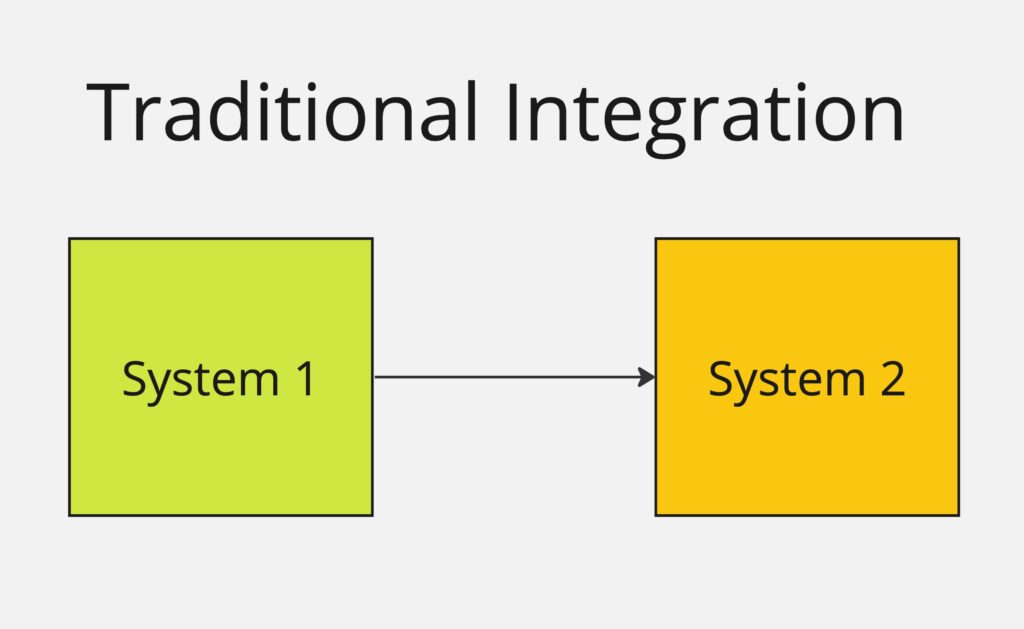
Traditional Software Integration
Traditionally, integrating software meant connecting applications to move data between them. This often required custom coding. The goal was to reduce double-entry and improve efficiency, but it had several drawbacks:
- Limited Information Transfer: Traditional integrations primarily focused on moving raw data between systems without adding any contextual or enriched information. This meant that the data transferred often lacked the depth needed for comprehensive analysis and decision-making.
- Manual Intervention Required: Since the data moved was not enriched or analyzed, it required human intervention to interpret and act upon it. This manual processing was not only time-consuming but also prone to errors.
Intelligent Integration
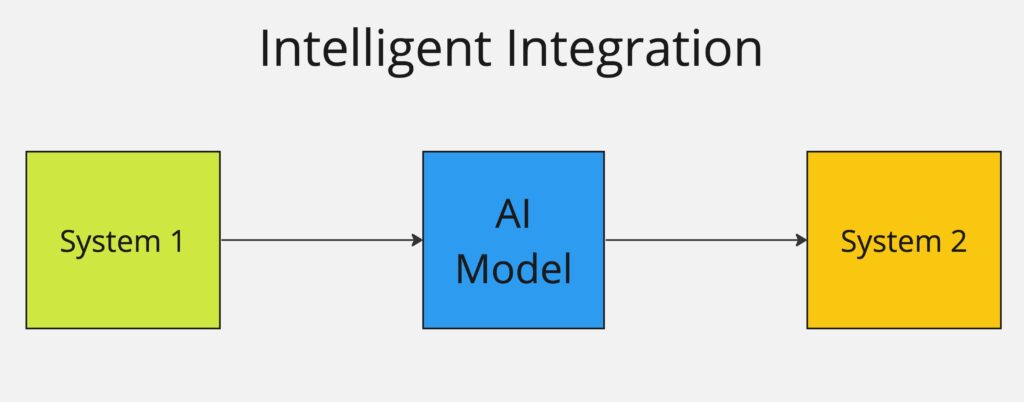
AI can revolutionize software integration. Intelligent integration goes beyond data transfer. It integrates AI APIs with software endpoints to enhance data, facilitate autonomous decision-making, and streamline repetitive tasks. This allows businesses to use digital intelligence for a competitive edge.
Enriching Data
One of the biggest benefits of intelligent integration is data enrichment. AI APIs can analyze and process data in ways traditional integrations can’t, providing deeper insights and more actionable information.
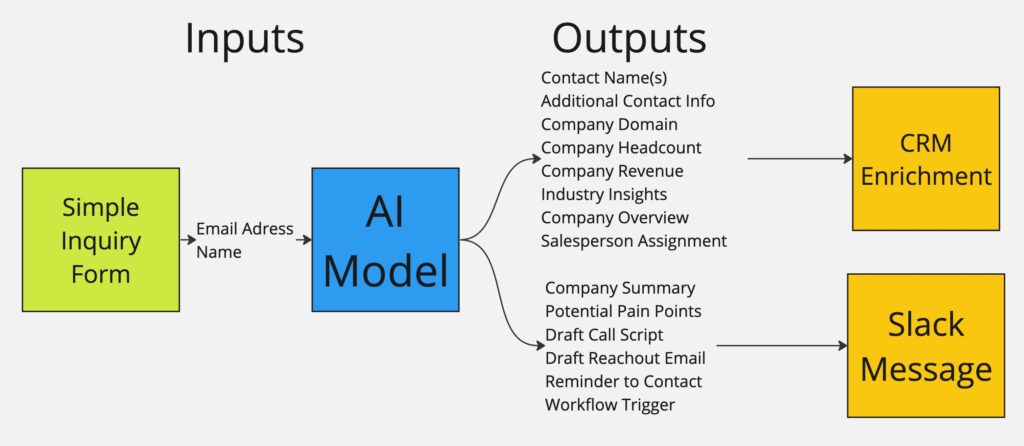
- Online Look-Up: Integrations with tools like Perplexity.ai allow AI to search online for additional contextual information. For example, from a company email address, the company domain can be searched, along with LinkedIn, to build a fuller picture of the company you’re dealing with. This information can be added to a CRM automatically for targeted outreach and richer reporting. Here’s a diagram of an AI model enriching CRM data and sending Slack notifications to a salesperson.
- Natural Language Processing (NLP): NLP APIs provide insights from unstructured text, audio, images, or video. For example:
- Sentiment Analysis: Determines the sentiment behind customer reviews, support queries, meeting transcriptions, or social media mentions.
- Topic Modeling: Labels key themes and topics within large volumes of text.
- Entity Recognition: Recognizes and categorizes entities (e.g., names, dates, locations) within text.
- Image and Video Recognition: These APIs can identify visual content, adding a new dimension to data analysis that previously required manual viewing. For instance:
- Object Detection: Detects and classifies objects within images or videos.
- Facial Recognition: Identifies individuals in images or videos.
- Visual Search: Allows users to search for products using images rather than text.
- Data Augmentation: AI can add context and insights to existing data, such as:
- Geospatial Data: Enriches customer data with location-based information.
- Behavioral Data: Analyzes user behavior patterns to predict future actions.
Intelligent Decisions with Intelligent Integration
Intelligent integration enables AI models to work with existing software to make decisions based on real-time data for enhanced business workflows.
Intelligently Integrated CRM
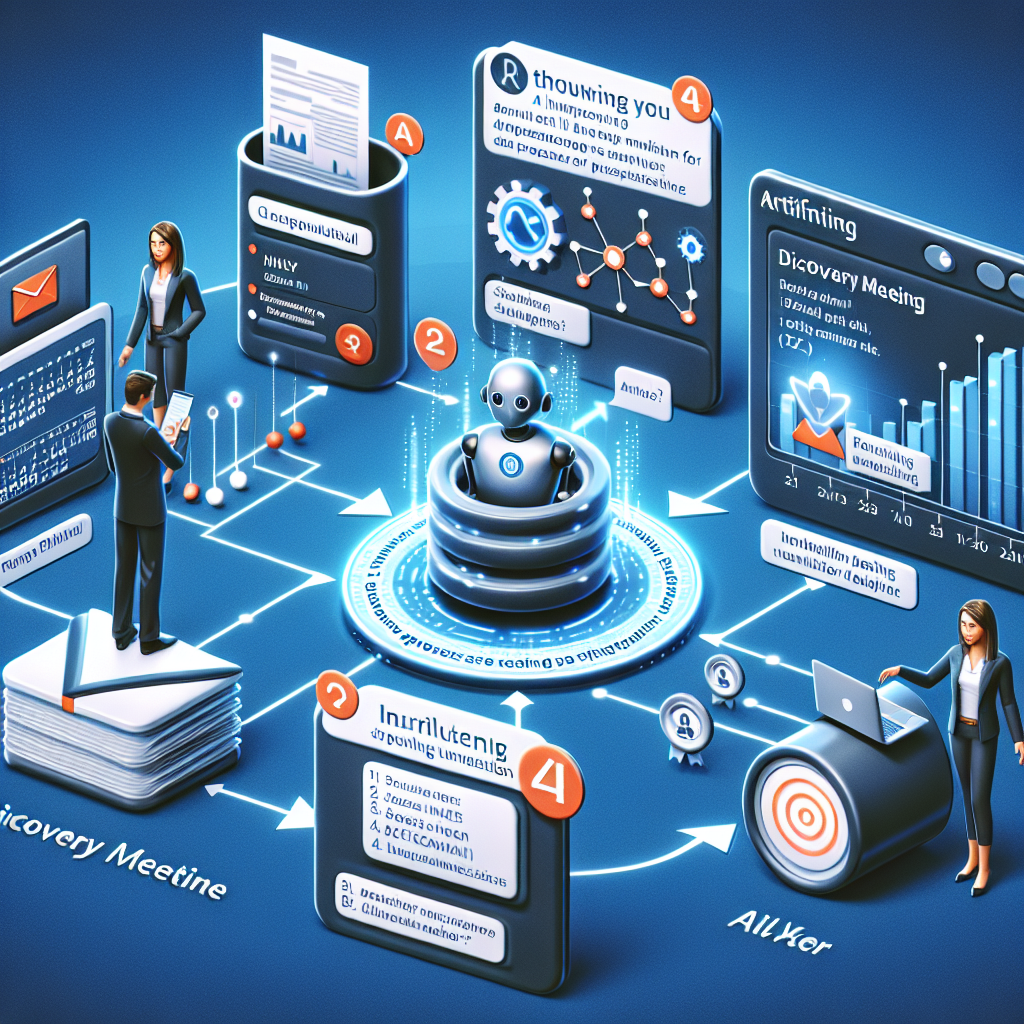
- Workflow Intelligence: Based on enriched data or interactions with prospects, AI can skip steps in workflows, take alternative paths, and involve salespeople where needed. For example, an AI model could read an inquiry message, determine that a qualification meeting is not required, enrich the data about the prospect, book a discovery meeting, and surface a summary of information about the prospect to the relevant salesperson in Slack.
- Lead Scoring and Prioritization: AI can analyze customer data to score leads based on their likelihood to convert, based on a variety of data points automatically prioritizing high-scoring leads in the CRM for sales teams to focus on.
- Customer Segmentation: Automatically segments customers based on behavior and engagement, allowing for more targeted campaigns.
Intelligently Integrated Analytics
- Demand Forecasting: Predicts demand for products or services, helping businesses manage inventory and supply chain more efficiently.
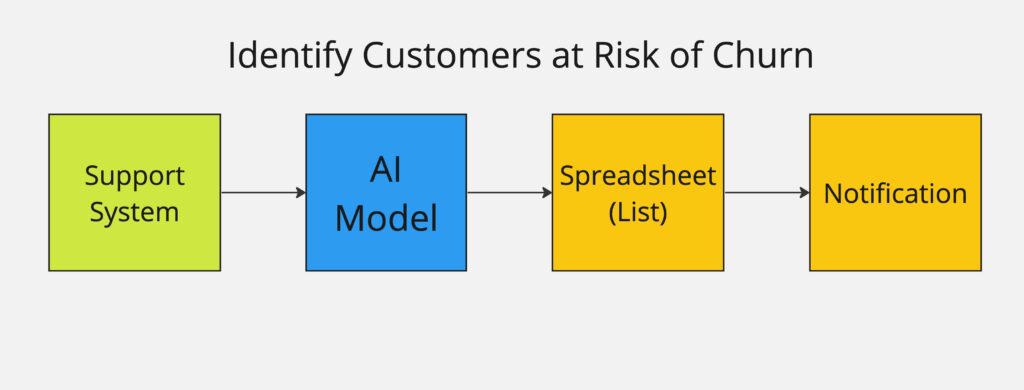
- Customer Churn Prediction: Identifies patterns indicating a customer is likely to churn, enabling timely intervention to retain customers. As demonstrated in this image:
Intelligently Integrated Customer Support Systems
- Automated Query Resolution: AI determines if a support query is adequately answered by existing FAQ documentation or the web, automatically responding to common queries or escalating complex issues to human agents.
- Sentiment Analysis: Analyzes customer interactions to gauge sentiment, prioritizing negative feedback for immediate attention by employees or supervisors.
Recommendation Engines
Analyze user behavior and preferences to provide personalized recommendations. Examples include:
- E-commerce: Recommends products based on a customer’s browsing and purchase history, increasing the likelihood of purchase.
- Content Platforms: Suggests relevant content based on a user’s interests, enhancing user engagement.
Automating Repetitive Tasks
Intelligent integration excels at automating repetitive tasks, freeing up human resources for more strategic activities. AI-powered automation can handle routine activities such as data entry, report generation, and customer support.
- Robotic Process Automation (RPA): Uses AI to automate rule-based tasks. For example:
- Data Entry: Extracts data from documents and inputs it into systems.
- Invoice Processing: Automates the processing of invoices.
- Customer Support: AI-powered chatbots handle common customer inquiries.
- Workflow Automation: Automates complex workflows involving multiple steps and systems. For instance:
- Customer Onboarding: Automates the customer setup and information-gathering stages.
- Marketing Campaigns: Automates the execution of marketing campaigns.
- IT Operations: Automates IT tasks such as system monitoring and incident management.
AI in Information Management
- Intelligent Document Processing: AI-powered tools can scan, interpret, and manage unstructured data.
- Metadata Suggestions: AI provides meaningful metadata suggestions for better data categorization.
- Data Separation and Relevance: AI systems separate business-critical data from redundant data.
- Enhanced Search and Retrieval: AI improves the ability to search, find, and use information.
Examples
- Mercy Radiology’s Invoice Processing:
- Source: AIMultiple
- Summary: Mercy Radiology decreased invoice processing time from 8-10 hours to 2 hours and enhanced cash flow by switching to daily invoicing, highlighting the significant time and cost savings achievable with intelligent automation.
- Flutter’s Customer Experience Improvement:
- Source: UiPath
- Summary: Flutter improved customer experience around its Know Your Customer process and saved millions through AI-powered automation, illustrating the financial and operational benefits of intelligent integration.
Conclusion
The shift from traditional software integration to intelligent integration marks a significant milestone in digital transformation. By connecting AI APIs to software endpoints, businesses can enrich data, make informed decisions, and automate tasks, driving efficiency and innovation. Embracing this shift will enhance operational efficiency and unlock new opportunities for growth and innovation.